Showing posts with label age. Show all posts

Monday, February 26, 2018

Fertility breakthrough: New research could extend egg health with age

new research on fertility treatments,human egg health and age
Credit: Courtesy of the researchers/Princeton University
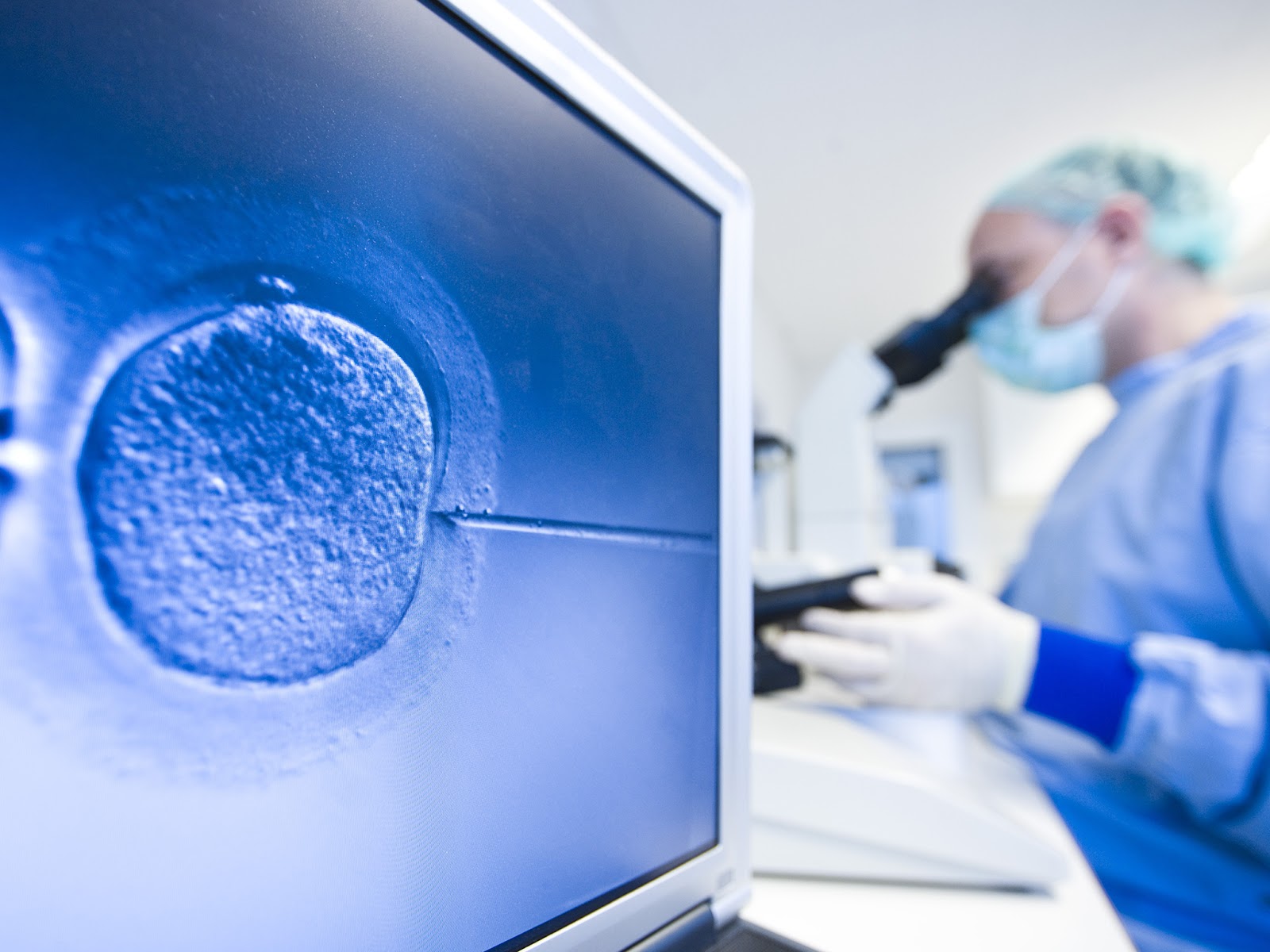
"Women have been told for years that if they don't have children before their mid-30s, they may not be able to. But a new study from Princeton University's Coleen Murphy has identified a drug that extends egg viability in worms, even when taken midway through the fertile window, which could theoretically extend women's fertility by three to six years. Her work appears in the current issue of the journal Current Biology.

"One of the most important characteristics of aging is the loss of reproductive ability in mid-adulthood," said Murphy, a professor of molecular biology and the Lewis-Sigler Institute for Integrative Genomics. "As early as the mid-30s, women start to experience declines in fertility, increased rates of miscarriage and maternal age-related birth defects. All of these problems are thought to be caused by declining egg quality, rather than a lack of eggs."

When she reviewed the literature on aging and on reproductive health about a decade ago, she discovered that this particular question -- how to maintain egg quality with age -- had been overlooked by researchers from both fields. "It's really why we started this," she said. "They were missing something that's really important to a lot of people. We just wondered whether we could do anything to contribute to that."

Murphy, who is also the director of the Paul F. Glenn Laboratories for Aging Research at Princeton, specializes in using a microscopic worm, Caenorhabditis elegans, to study longevity. These worms have many of the same genes as humans, including those that drive the aging processes of their three-week-long lives. Several years ago, researchers in her lab discovered that C. elegans not only exhibits a similar mid-life decline in reproduction, but also that their unfertilized eggs (oocytes) showed similar declines in quality with age to human eggs..."

Learn more:https://www.sciencedaily.com/releases/2018/02/180222125659.htm

Tuesday, September 12, 2017

Are IVF delivery rates affected by the age of the male partner?

ivf and age of male partner,is ivf delivery rates affected by the age of the male partner
independent.co.uk
"Men, unlike women, do not have a menopause or a predictable and detectable decline in their fertility. Female age is thus the dominant factor in predicting (or explaining) a couple's chance of conception, whether natural or assisted.

A few studies have found that the chance of natural conception can be affected by the age of the male partner, particularly in the genetic health of sperm cells, but the celebrity examples of Charlie Chaplin or Luciano Pavarotti have kept alive the notion that male fertility goes on forever.

Now, a new study from the USA in IVF couples shows quite clearly that live birth outcome is clearly affected by the age of the male partner and that in certain younger female age groups, where the effect of age is less potent, the chances of live birth can be appreciably reduced by the man's increasing age. 

"Our study found an independent effect of male age on the cumulative incidence of live birth," said investigator Dr Laura Dodge from Beth Israel Deaconess Medical Center and Harvard Medical School, Boston, USA. Dr Dodge will present the study's results on Tuesday at the 33rd Annual Meeting of ESHRE in Geneva..." - Learn More

Tuesday, April 11, 2017

Why fertility declines with age?

image source
"Researchers at the University of Montreal Hospital Research Center (CRCHUM) have discovered a possible new explanation for female infertility. Thanks to cutting-edge microscopy techniques, they observed for the first time a specific defect in the eggs of older mice. This defect may also be found in the eggs of older women. The choreography of cell division goes awry, and causes errors in the sharing of chromosomes. These unprecedented observations are being published today in Current Biology.

"We found that the microtubules that orchestrate chromosome segregation during cell division behave abnormally in older eggs. Instead of assembling a spindle in a controlled symmetrical fashion, the microtubules go in all directions. The altered movement of the microtubules apparently contributes to errors in chromosome segregation, and so represents a new explanation for age-related infertility," stated CRCHUM researcher and Université de Montréal professor Greg FitzHarris.

Women -- and other female mammals -- are born with a fixed number of eggs, which remain dormant in the ovaries until the release of a single egg per menstrual cycle. But for women, fertility declines significantly at around the age of 35.

"One of the main causes of female infertility is a defect in the eggs that causes them to have an abnormal number of chromosomes. These so-called aneuploid eggs become increasingly prevalent as a woman ages. This is a key reason that older women have trouble getting pregnant and having full-term pregnancies. It is also known that these defective eggs increase the risk of miscarriage and can cause Down's syndrome in full-term babies" explained FitzHarris..."

Learn more:


Friday, February 3, 2017

Experiencing multiple pregnancies increases a woman's risk of developing atrial fibrillation later in life

multiple pregnanies and atrial fibrillation,is experiencing multiple pregnancies increases a woman's risk of developing atrial fibrillation,
image source
"Experiencing multiple pregnancies increases a woman's risk of developing atrial fibrillation later in life, according to new research in the American Heart Association's journal Circulation, which includes the inaugural Go Red for Women issue.

Atrial fibrillation is an irregular heartbeat that can lead to blood clots, stroke, heart failure and other heart-related complications.

In this first analysis to investigate a link between number of pregnancies and atrial fibrillation, researchers led by Jorge A. Wong, M.D., MPH, at McMaster University in Hamilton, Ontario, Canada, and Christine M. Albert, M.D., MPH, at Brigham and Women's Hospital in Boston, analyzed data from 34,639 participants from the Women's Health Study. Study participants were a median age of 53, had a median of two prior pregnancies and were healthy at the start of the study. They completed annual questionnaires and observational follow-ups. After an average 20 years of follow up, 1,532 atrial fibrillation cases had occurred.

"We found that an increase in the number of pregnancies was associated with a higher risk of future atrial fibrillation," Wong said. "For example, women with four or more pregnancies were approximately 30 percent to 50 percent more likely to develop atrial fibrillation compared to women with no pregnancies."

Researchers speculate that the repeated exposure to physiological, metabolic or hormonal factors during pregnancy could explain the link..."

Learn more:


Monday, November 21, 2016

Older first-time mothers are also more likely to live longer

mothers of old age more likely to live longer
"The average age of a woman giving birth for the first time has risen dramatically in the United States over the past 40 years, driven by factors like education or career. A new study by researchers at University of California San Diego School of Medicine found that women choosing to become first-time mothers later in life may increase their chances of living into their 90s.
The study, published online November 17 in American Journal of Public Health, is the first to look at age at first childbirth in relation to longevity. The researchers found an association between a woman's age at childbirth and parity (the number of times a woman has been pregnant) with survival to age 90.
"We found that women who had their first child at age 25 or older were more likely to live to age 90," said Aladdin Shadyab, PhD, lead author of the study with the Department of Family Medicine and Public Health at UC San Diego School of Medicine. "The findings indicate that women with two to four term pregnancies compared with a single term pregnancy were also more likely to live at least nine decades..."

Monday, November 7, 2016

Twelve DNA areas 'linked with the age at which we have our first child and family size'

family size and dna,dna areas linked with age we have our first child,dna areas linked with age,dna and when we have our first child
image credit: 5mindna.com
"Researchers have identified 12 specific areas of the DNA sequence that are robustly related with the age at which we have our first child, and the total number of children we have during the course of our life. 

The study, led by the University of Oxford, working together with the Universities of Groningen, The Netherlands and Uppsala, Sweden, includes an analysis of 62 datasets with information from 238,064 men and women for age at first birth, and almost 330,000 men and women for the number of children. 

Until now, reproductive behaviour was thought to be mainly linked to personal choices or social circumstances and environmental factors. However, this new research shows that genetic variants can be isolated and that there is also a biological basis for reproductive behaviour. The paper is co-authored by over 250 sociologists, biologists, and geneticists from institutions worldwide, and has been published in the journal, Nature Genetics.

Lead author Professor Melinda Mills, from the Department of Sociology and Nuffield College at the University of Oxford, comments: 'For the first time, we now know where to find the DNA areas linked to reproductive behaviour. For example, we found that women with DNA variants for postponing parenthood also have bits of DNA code associated with later onset of menstruation and later menopause. 

One day it may be possible to use this information so doctors can answer the important question: "How late can you wait?" based on the DNA variants. It is important to put this into perspective, however, as having a child still strongly depends on many social and environmental factors that will always play a bigger role in whether or when we have babies.'..."

Learn more: